 how-to
What Size Dumpster Do You Need for Roofing Debris?
Last Updated: November 2, 2026
Quick Summary
Match the roofing debris dumpster to your tear-off by measuring the roof footprint, not the sloped surface, then multiplying by the number of shingle layers coming off. A 15-yard dumpster fits most single-story, one-layer tear-offs, while larger footprints or two layers need an 18-yard to 20-yard container.
- A 10-yard dumpster suits a small shed or porch roof with one layer.
- Weight limits can be reached before a container looks half full, so estimate weight first.
- Three layers of old shingles on a large roof can push a container past its limit.
- Place the container on a firm, level surface close to the tear-off.
- Keep the load below the fill line so the container can be hauled safely.
Table of Contents
- Dumpster Size for Roof Shingles: Match the Container to the Tear-Off
- Roofing Dumpster Weight Limits and Tonnage Allowances
- Dumpster Rental for Roofing Debris Removal Cost: What Drives the Quote
- Roof Tear-Off Debris Disposal: Placement, Loading, and Accepted Materials
- Choosing the Right Roofing Dumpster Without Guesswork
- Frequently Asked Questions
Dumpster Size for Roof Shingles: Match the Container to the Tear-Off
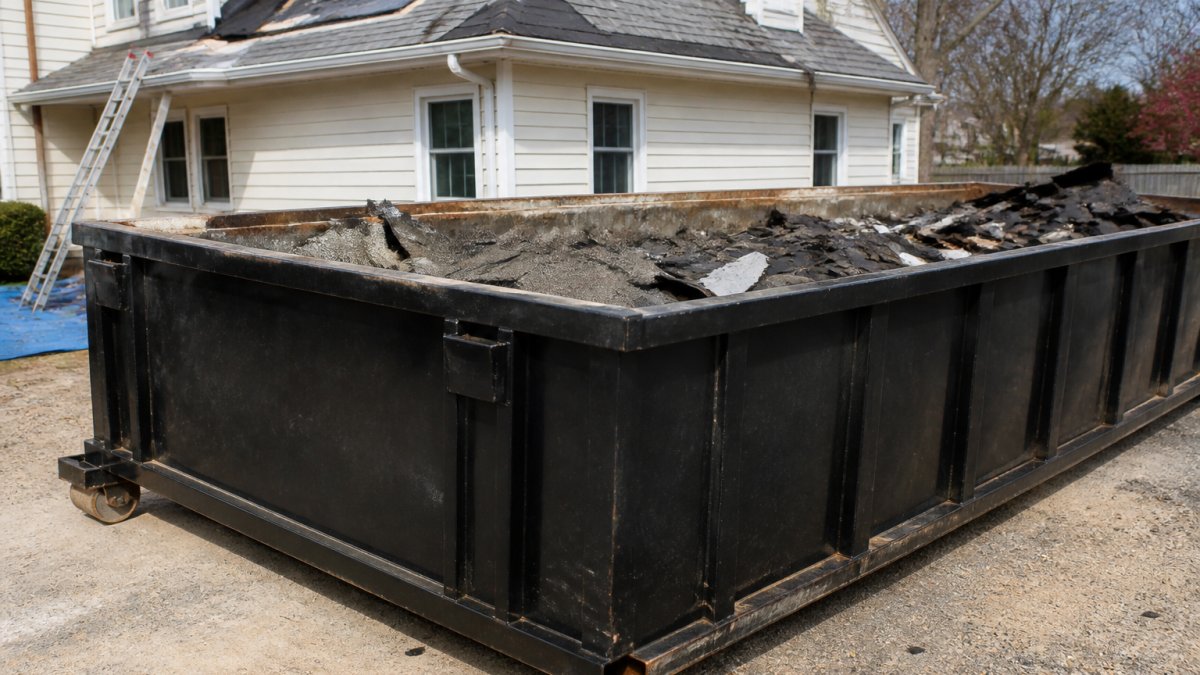
Getting the roofing debris dumpster size right helps you avoid paying for an extra delivery. A roofing debris dumpster is a roll-off sized to hold torn-off shingles, underlayment, nails, and flashing without exceeding its weight allowance. Measure the roof footprint, not the sloped surface, then multiply by the number of shingle layers coming off. Browse our affordable dumpsters to pick the right container for your tear-off.
| Roof Situation | Typical Container | Why |
|---|---|---|
| Small shed or porch roof, one layer | 10-yard dumpster | Compact volume, easy placement |
| Single-story home, one layer | 15-yard dumpster | Fits most standard tear-offs |
| Larger footprint or two layers | 18-yard to 20-yard dumpster | Extra volume for bulk and weight |
Roofing Dumpster Weight Limits and Tonnage Allowances
Weight is where roofing projects surprise people: a container that looks half full can already be at its tonnage limit. Roll-off rentals often include a tonnage allowance, and weight limits apply to every container. Three layers of old shingles on a large roof can push a container past its limit before it looks full, so estimate weight first and volume second. Ask about the tonnage allowance before the container lands in your driveway; weight questions are answered on our frequently asked questions page.
Dumpster Rental for Roofing Debris Removal Cost: What Drives the Quote
Pricing for dumpster rental for roofing debris removal cost depends on quantity, dates, and delivery. Once you know your size and weight needs, contact us for a quote or check our website for current prices.
Roof Tear-Off Debris Disposal: Placement, Loading, and Accepted Materials
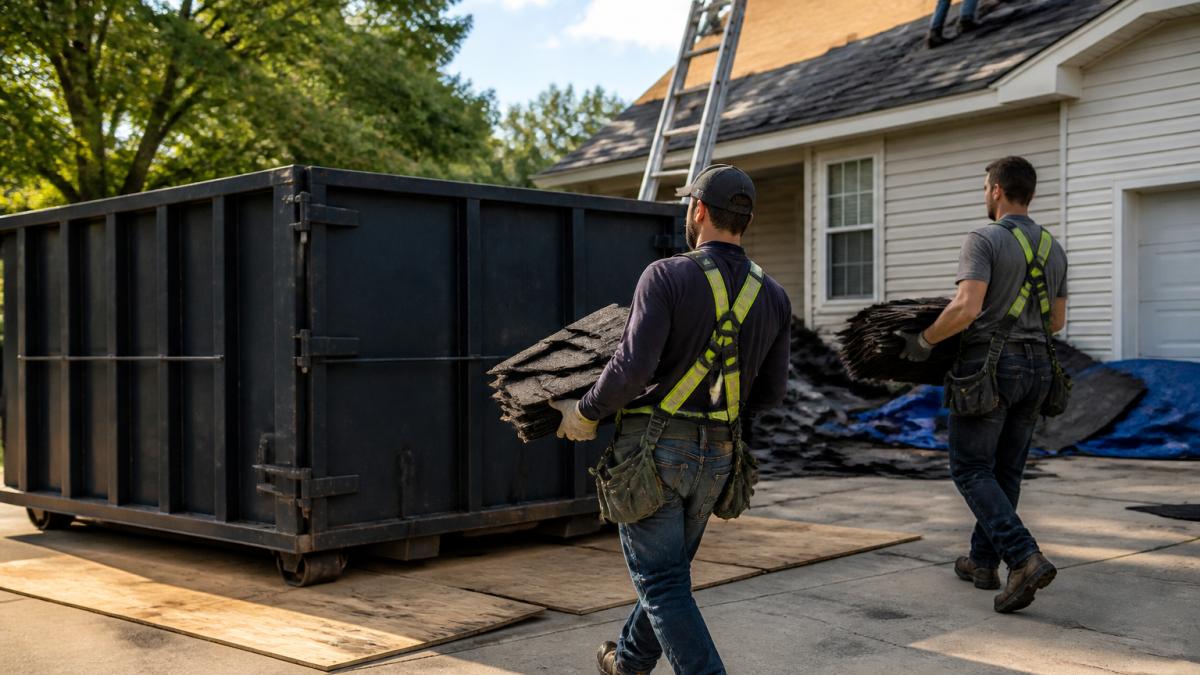
Put the container on a firm, level surface as close to the tear-off as access allows. Keep the load below the fill line so the container can be hauled safely.
Choosing the Right Roofing Dumpster Without Guesswork
Measure the roof footprint, count the layers, estimate weight, then confirm the details with us before booking. At Southside Dumpsters LLC, our online system lets you book a roll-off dumpster in minutes through four easy steps. We serve the Deep Run area. Get started with Southside Dumpsters LLC and book the right roofing container for your tear-off today.
Frequently Asked Questions
What size dumpster do I need for roof shingles?
It depends on roof area and how many shingle layers you are removing. Measure the roof footprint, multiply by layers, and confirm the details with us before booking.
How much does a dumpster rental for roofing debris removal cost?
Pricing depends on quantity, dates, and delivery. Confirm current rates on the Southside Dumpsters LLC website or request a quote before you schedule.
What roofing materials can go in a rental dumpster?
Confirm with your provider which materials are accepted before loading.